

Cross-silo
PureVPN review: useful features with privacy details to read closely

Original illustration of PureVPN plans and privacy policy layers
Original editorial illustration created for VPNVertex.
Illustration, not a VPNVertex hands-on test.
PureVPN advertises a low long-term price and broad device coverage. This review reads its 27-month pricing, privacy policy and refund terms closely before recommending it.
PureVPN combines a low displayed long-term price with broad device and location claims. The value case is real, but the privacy policy has enough detail that a careful buyer should read beyond the no-activity-logs headline.
This page may contain affiliate links. They do not change the price you pay or our editorial assessment.
This assessment is based on PureVPN’s current documentation, its published assessment material and independent reviews. It is not a VPNVertex hands-on test.
The short answer
PureVPN is worth considering when price, a large location list and multi-device coverage matter more than the smallest possible account footprint. The provider’s current pricing page displayed 80-plus locations, up to ten devices and several plan tiers when checked on September 16, 2026.
The privacy decision needs more care. PureVPN says it does not keep browsing history, original IP addresses, VPN IP addresses, connection timestamps or DNS queries. Its policy also describes account, payment, support and limited operational data that a reader should understand before subscribing. That is not a contradiction; it is the difference between “no activity logs” and “no data of any kind.”
Who should choose PureVPN
PureVPN is aimed at a value-focused buyer who wants a conventional account, broad consumer-platform coverage and several optional security products in one checkout. The fit is strongest when the reader wants up to ten devices and 80-plus locations and is willing to compare the whole subscription rather than the lowest promotional line.
The weaker fit is a reader who wants a minimal-account provider, a flat price that never changes with term length or a policy that can be summarized as “nothing is collected.” PureVPN’s current privacy policy is more nuanced than its headline. That is not automatically a reason to reject it, but it does make the policy a required part of the purchase decision.
Plan and price snapshot
The official US order page displayed a 27-month Standard, Plus and Max offer at the time of review:
| Tier | Displayed monthly equivalent | Displayed billed amount | Positioning |
|---|---|---|---|
| Standard | $2.15/month | $58.20 for 27 months | Core VPN plan |
| Plus | $2.73/month | $73.80 for 27 months | VPN plus added privacy/security features |
| Max | $3.55/month | $95.85 for 27 months | Highest displayed bundle |
These are a dated display snapshot, not a permanent price promise. PureVPN’s page also explains that subscriptions renew at the applicable renewal rate unless the customer turns renewal off. Compare the first payment and the renewal price, not only the monthly equivalent in the promotional card.
The same order page showed separate annual renewal prices after the 27-month term: $47.95 for Standard, $69.95 for Plus and $84.95 for Max. Taxes, country and checkout state can change the final amount. The first-term total is not the long-term annual price.
What the privacy policy actually says
PureVPN’s privacy policy, updated in February 2026, says signup can involve a name, email address, password and payment method. It says the service does not retain browsing history, original IP address, assigned VPN IP address, connection timestamps or DNS queries. That is the core no-activity-logging claim.
The same document gives important context. It describes collecting the day of connection, but not the time, along with ISP name and routes rather than a personal IP address or exact location. It also discusses analytics, support information and bandwidth totals. A tracker or ad-blocking feature may see domains during a connection because that visibility is part of how the feature operates.
Dedicated-IP customers should read the special retention language too: the policy says a dedicated IP remains in records for 25 days after a subscription ends, while an extended WireGuard duration IP is retained for 24 hours. Those details do not automatically make the service unsuitable, but they matter to a privacy-first reader.

Original editorial image created for VPNVertex.
Why the policy detail matters
There are two common mistakes in VPN comparisons. The first is to treat every piece of operational data as browsing history. The second is to treat the absence of browsing history as proof that a provider has no meaningful records. PureVPN’s policy is a useful example of why neither shortcut works.
A connection day, an ISP name, a support ticket or a bandwidth total may be less revealing than a destination log, but the relevance depends on the reader’s threat model. Someone trying to avoid routine ISP visibility may focus on traffic and DNS handling. Someone concerned about account linkage may care more about signup, payment and dedicated-IP records.
The fair editorial question is therefore not “does PureVPN collect anything?” It is “which categories does it say it collects, for what feature or process, for how long, and how does that compare with the alternatives?” That framing makes the policy useful instead of turning a binary label into a misleading verdict.
Audits and independent review context
PureVPN links to a KPMG assessment letter and its own no-log assessment material. A provider-commissioned assessment can be useful evidence when the scope and date are available. It should still be described as an assessment of defined systems and records, not as a guarantee covering every future product change.
Current search results for PureVPN reviews include PCMag, VPNMentor, TechRadar, PCWorld, All About Cookies, Trustpilot and user discussions. That range matters because each source answers a different question: editorial reviews examine features and usability, consumer platforms show complaint patterns, and a provider policy explains the organization’s stated data practices. None should be collapsed into a single “best” score.
Devices, locations and refund terms
The official page advertises up to ten devices and more than 80 locations. That is a practical fit for a household with several phones, computers and streaming devices. Check the exact tier, platform and simultaneous-use language at checkout because plan features can change.
PureVPN advertises a 31-day money-back guarantee. The refund policy excludes certain renewals and describes conditions around trials and recurring charges. A trial that rolls into a paid renewal should not be treated as an unlimited free evaluation, so set a reminder and read the cancellation route for the channel used.
Where PureVPN fits among other providers
Readers who want to compare audit evidence across providers can start with our independent VPN audit guide. The NordVPN review is a useful contrast for a VPN-first product with a different pricing and account model. The Proton VPN review is relevant for readers who value a privacy company ecosystem, while the Surfshark review gives another multi-device comparison point.
PureVPN’s advantage is breadth at a displayed low long-term price. Its caution point is policy reading: account data, operational metadata and feature-specific visibility deserve a closer look than the headline log claim.
Applications, devices and important functions
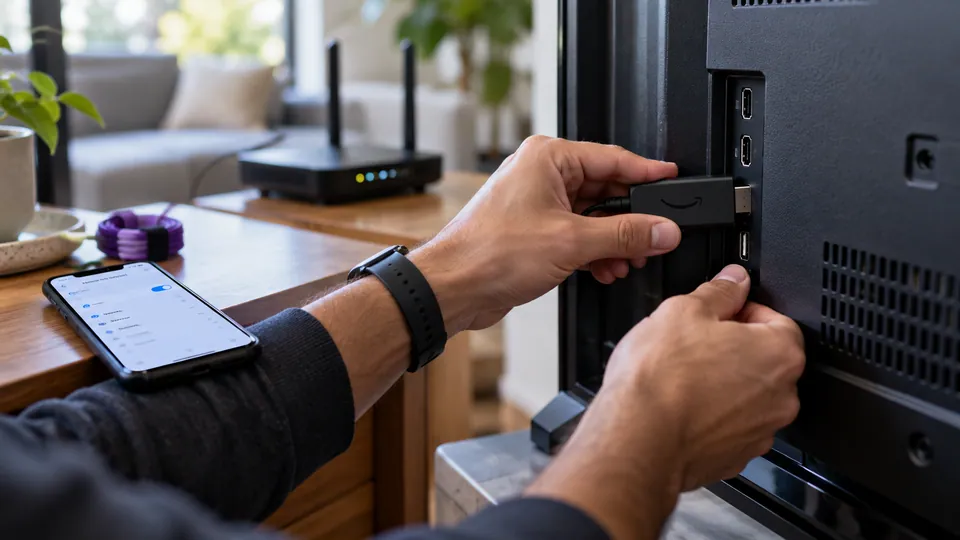
The current order page says PureVPN offers access through 80-plus locations and protection for up to ten devices with one account. It also lists a range of platform links in the site footer, including Windows, Mac, Android, iOS, browser extensions, Android TV, Firestick TV, Chromebook, router and Linux options. Those are provider-published availability claims, not a test of every app or platform.
The plan ladder matters. The order page showed Tracker Blocker in the Standard, Plus and Max cards, while Secure Password Manager was shown as available across the displayed tiers and Data Removal, Dark Web Monitoring and the eSIM as Max-only extras. The card labels can change, so the correct editorial habit is to record the selected tier and the date instead of presenting the feature matrix as permanent.
PureVPN also advertises add-ons such as Dedicated IP, port forwarding and extra multi-login. A reader considering those features should treat them as separate products with their own data, price and refund questions. The privacy policy specifically says a dedicated VPN IP remains in records for 25 days after a subscription ends. That detail is more important to a dedicated-IP buyer than the headline location count.
Privacy and audit evidence
PureVPN’s current privacy policy says signup requires a name, email address, password and payment method. It also says the service collects the day of connection, but not the time, plus ISP name and routes rather than a personal IP or exact location. For service improvement it describes software analytics, statistics and communications from email, chat and feedback forms.
The policy separately says it does not store browsing activity, assigned VPN IPs, original IPs, connection timestamps, sites visited, outgoing traffic or content accessed. It links to a no-log assessment page and includes a dedicated-IP retention exception. That is a coherent set of claims only if the article keeps the categories distinct: account data, support data, limited operational data and VPN activity are not interchangeable.
PureVPN also publishes a KPMG assessment letter. It is relevant evidence because it is a primary document linked by the provider, but it is not a reason to remove all uncertainty about later app versions, new add-ons or operational changes. A formal assessment has a defined period and scope. Readers who want a cross-provider view can continue to our independent VPN audits guide.
Support and refund rules
PureVPN’s refund page states a 31-day policy for the initial purchase. It also says the guarantee does not apply to renewal payments, and that a 7-day trial renews into a paid subscription unless the customer cancels or turns off auto-renew before the trial ends. Trial-based renewals are described as non-refundable.
Payment channel matters too. The refund page says CoinPayments, Google Play Store and Apple App Store purchases do not support the refund option, and that the checkout marks non-refundable methods. The 31-day headline therefore needs the footnote: initial purchase, eligible channel, applicable terms. It should not be rewritten as “every PureVPN payment can be refunded for 31 days.”
Support is part of the practical choice. A large feature stack creates more opportunities for a customer to need help, especially when an add-on, dedicated IP or extra login is involved. Save the order confirmation, renewal date and cancellation route at purchase. That advice is procedural, not a claim about PureVPN’s response time.
Comparison by need
| Need | PureVPN fit | Evidence or check |
|---|---|---|
| Lowest dated long-term display | Competitive | 27-month order page snapshot and annual renewal |
| Many consumer devices | Strong on provider claim | Up to ten devices; verify selected tier |
| Minimal signup data | Weak match | Name, email, password and payment are requested |
| Specific add-on | Conditional | Separate price, records and refund terms |
| Refund flexibility | Conditional | 31 days initial purchase; renewals and channels excluded |
Use the NordVPN review for a specialist VPN-first comparison, the Proton VPN review for a different privacy-company model and the Surfshark review for another multi-device reference point. The right comparison is determined by the buyer’s plan, device count and privacy threshold.
Methodology and what we did not test
This article combines the PureVPN US order page, pricing display, privacy policy, refund policy and published KPMG assessment, all checked on September 16, 2026, with independent sources listed in Sources.
What we did not test
We did not create an account, buy a plan, follow an affiliate checkout, test a streaming service, measure speed, inspect DNS or IPv6 leaks, test tracker blocking, verify dedicated-IP retention in a live account or submit a refund request. We did not treat the provider’s claims as our own measurements. Prices in the article are dated display values from the official order page, not a promise of future availability.
Limits that should stay visible
The most important limitation is temporal. Promotional price cards, plan features, locations, app support and refund wording can change. The second is evidentiary: a policy and a provider-linked assessment tell the reader what is documented, while an independent test may measure a specific platform under a specific setup. The third is commercial: the initial 27-month price can look very different from the following annual renewal.
Those limits do not make the review inconclusive. They make the decision legible. A value buyer can choose PureVPN with eyes open, record the renewal and understand which privacy categories are being accepted.
Original editorial image created for VPNVertex.
Questions to answer at checkout
Which country and currency are selected? PureVPN’s order page can render different terms depending on the checkout context. Capture the plan card, billing duration, total first charge, tax treatment and renewal line before payment. A monthly equivalent without those fields is not enough for a cost comparison.
Which features are essential? If the requirement is only VPN access, compare Standard against the alternatives. If a password manager, data removal, dark-web monitoring, tracker blocker, dedicated IP or additional login is the reason for choosing PureVPN, record that add-on separately. Bundled features can change without changing the core VPN policy.
Which data category matters most? A reader worried about browsing history should read the no-activity-log language. A reader worried about account linkage should focus on signup, payment, support analytics and dedicated-IP retention. The privacy policy supports different conclusions for different threat models.
Finally, which refund channel applies? The 31-day headline does not cover every renewal or app-store purchase. Check the channel’s label, the trial renewal date and the cancellation path. Those four questions turn a promotional card into a decision record.
That record should include a screenshot or saved copy of the order state, but it should not be presented as a timeless price. PureVPN’s page is dynamic and the offer can change. This table is useful because it preserves the exact 27-month context and annual renewal values that were visible during this check.
It also makes the renewal question concrete. Standard looks cheapest in the first card, but the comparison changes once the annual continuation is considered. Plus and Max add features, not simply more VPN bandwidth, so a buyer should confirm that the add-on is worth the additional account and renewal complexity.
Final verdict
PureVPN is a reasonable value candidate for buyers who want a large location list, up to ten devices and a long refund window. It is less compelling for someone whose main requirement is the smallest possible signup record or the simplest possible privacy story. For alternatives, compare current NordVPN plans and our Mullvad review.
Before subscribing, confirm the current tier, first-term price, renewal rate and refund channel. Then read the privacy policy with the tracker, dedicated-IP and connection-metadata sections in view. That process gives the product a fair assessment without confusing a no-activity-log promise with zero data collection.
Sources
- PureVPN US order page, checked September 16, 2026; 27-month first-term and annual renewal display
- PureVPN pricing, checked September 16, 2026
- PureVPN privacy policy
- PureVPN refund policy
- KPMG assessment letter
- PCMag review, VPNMentor review and additional independent results retained in the dated editorial research record